
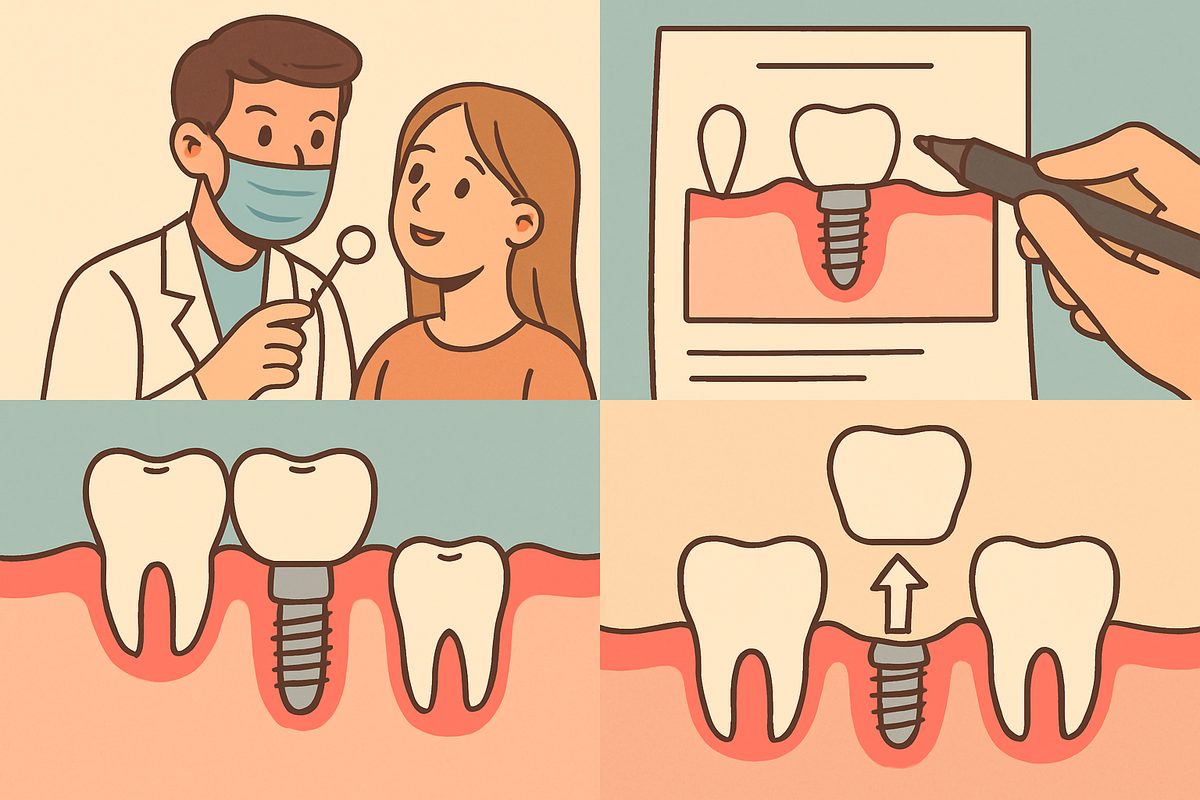
If you’re wondering how to do dental implants, this short guide will walk you through each step in plain language. Dental implants are titanium posts placed in the jaw to replace tooth roots and support crowns, bridges, or full-arch prosthetics. Read on for a clear, step-by-step overview of the process, who qualifies, what recovery looks like, risks and costs, and how advanced centers plan complex cases.
Who Is a Good Candidate for Dental Implants?
Good candidates are adults missing one or more teeth or facing failing teeth who want a permanent solution. Candidates should be in generally good health, with controlled medical conditions like diabetes and no active gum disease. Adequate jawbone is needed for implant support; when bone is low, grafting or special implants can still make treatment possible.
Step‑by‑Step: How to Do Dental Implants
Initial exam and 3D imaging
The first visit includes a clinical exam, review of your medical history, and 3D imaging. A CBCT (3D) scan maps bone volume, density, and nerve locations so surgeons can plan safely and avoid complications.
Treatment planning and digital design
Using Digital Smile Design and software, the team plans implant size, angle, and final tooth shape. Computer-guided planning improves accuracy and helps predict esthetic outcomes before surgery.
Preparatory treatments (extractions, bone grafting, sinus lift)
If teeth need removal or bone is insufficient, extractions and grafts may be scheduled first. Grafting can add months to treatment while bone heals; sometimes guided techniques or zygomatic implants avoid extensive grafting in severe cases.
Surgical placement of the implant
Implants are placed under local anesthesia with optional sedation. Guided surgery follows the digital plan to position implants precisely. The titanium post is inserted into bone and the site is closed to heal.
Immediate vs. delayed loading (same‑day teeth)
Some patients qualify for temporary same‑day restorations if primary stability is strong. Others need a healing period (usually 3–6 months) for osseointegration before attaching final teeth. Your surgeon will choose the safest option.
Final restoration: crowns, bridges, or full‑arch prosthetics
Once implants are stable, custom restorations are made—often using in‑house 3D milling or printing for precise fit. Zirconia crowns, bridges, or full-arch prosthetics are attached to the implants for a natural look and strong function.
Recovery, Aftercare, and Follow‑Up
Expect mild swelling and discomfort for a few days; pain is usually well-controlled with medications. Keep the area clean with gentle rinses, soft foods, and good oral hygiene. Follow-up visits monitor healing and confirm osseointegration before final restorations are placed.
Risks, Success Rates, and Longevity
Common risks include infection, implant failure, or nerve irritation. Early signs of trouble are persistent pain, swelling, or loosening—contact your dentist if these occur. Success rates typically exceed 95% for healthy patients. Good oral hygiene, regular dental visits, and avoiding smoking help implants last decades.
Cost, Financing, and What’s Often Included
Cost varies by number of implants, need for grafting, and type of restorations. All‑inclusive packages may cover imaging, sedation, extractions, grafts, and final teeth. Many practices offer financing, in‑house plans, or third‑party payment options to spread costs.
Why Choose an Advanced Implant Center for Complex Cases
Complex cases benefit from a center that offers 3D CBCT imaging, computer‑guided surgery, Digital Smile Design, and in‑house 3D printing/milling. Bluegrass Dentistry and Dr. Seth Chambers in Lexington provide these capabilities and advanced options like zygomatic implants for severe bone loss—helping patients get predictable, same‑day results when appropriate.
Ready to Learn More About How to Do Dental Implants?
If you want a personalized plan or a virtual smile preview, book a consultation with Bluegrass Dentistry. Their team can explain your options, timelines, and financing so you can move forward with confidence.

