An orthodontic implant is a small, temporary screw placed in the jawbone to give your orthodontist a stable point to move teeth against. Orthodontists and patients choose an orthodontic implant when traditional methods (like braces alone or headgear) won’t provide the control needed. This article explains what an orthodontic implant is, how it works, who is a good candidate, what to expect during placement and recovery, common risks, alternatives, cost, and timeline, and how to take the next step — including options for an orthodontic implant in Lexington, KY.
What is an orthodontic implant?
An orthodontic implant — often called a temporary anchorage device (TAD) — is a small titanium screw placed into bone for short-term use during tooth movement. It is not the same as a permanent dental implant that replaces a missing tooth. A TAD stays in place only while it provides anchorage to move teeth more predictably, then is removed when treatment goals are met.
Moreover, while the traditional dental implant is designed for long-term integration and tooth replacement, an orthodontic implant serves a distinct purpose in orthodontic treatment by providing temporary stability. This focused application allows for precise tooth movements that might be difficult to achieve with braces alone.
How orthodontic implants work
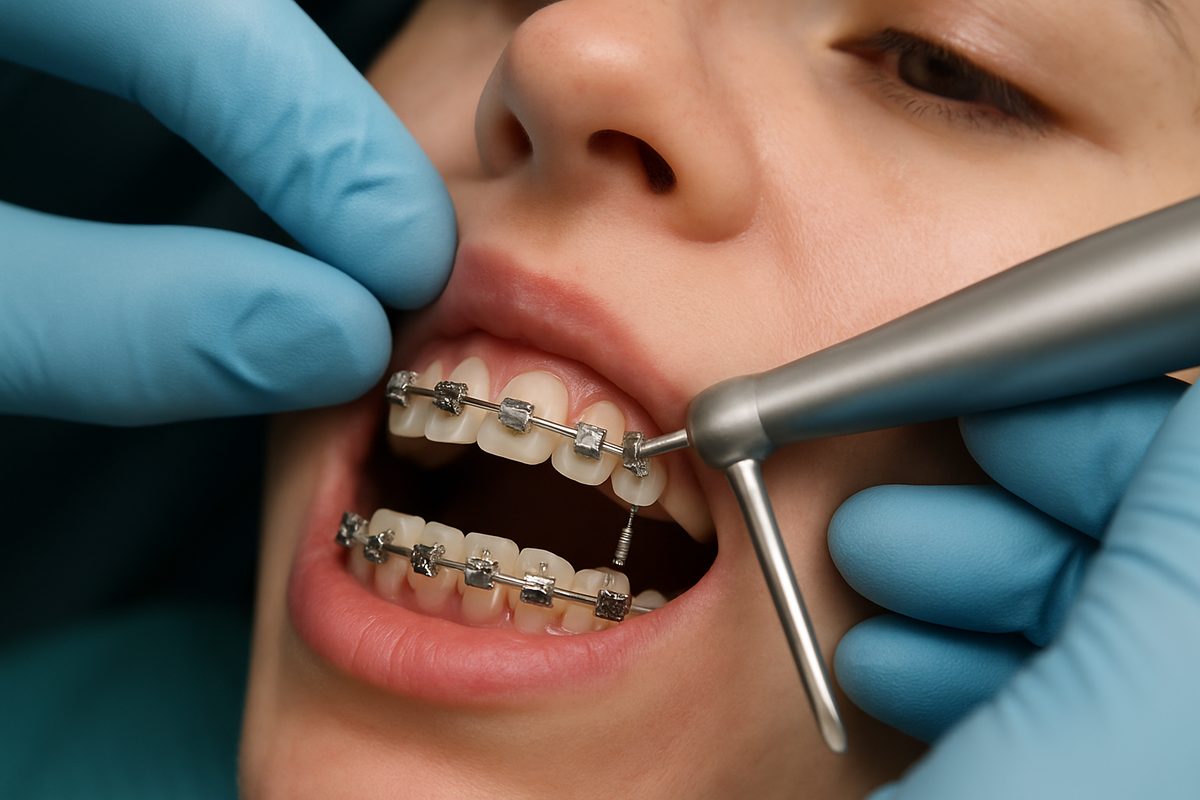
Orthodontic implants act as fixed anchor points. Braces or elastic chains attach to the screw, directing force in a precise direction. Because the implant is rigidly held in bone, it prevents unwanted tooth movement and lets your orthodontist apply stronger or more focused forces. This often speeds up complex movements and improves accuracy.
Benefits of using an orthodontic implant
- Fewer adjustments and less reliance on patient compliance (no headgear).
- Better control for moving molars, closing gaps, or correcting bite asymmetry.
- Can shorten overall treatment time in many cases.
- Avoids unnecessary tooth extractions by providing alternative anchorage.
Who is a good candidate for an orthodontic implant?
Good candidates include teens with sufficient jaw growth and adults who want predictable tooth movement. Your dentist will check bone thickness, gum health, and overall medical history. Conditions like uncontrolled diabetes or poor oral hygiene can affect suitability. Adequate bone at the planned site is essential for stable placement.
What to expect during the orthodontic implant procedure
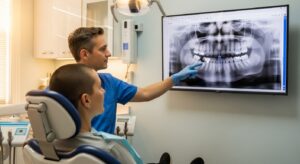
Expect a consultation with exam and 3D imaging to plan placement. On procedure day, local anesthesia is used; light sedation can be offered if needed. Placement is quick — often under 30 minutes — and the implant can be loaded (connected to braces) right away. Most patients return to normal activities the same day.
Recovery, care, and maintenance
You may feel mild soreness for a few days. Keep the area clean with gentle brushing and salt rinses. Avoid hard or sticky foods on that side until healed. Orthodontic implants are usually removed once they’ve done their job, commonly within several months to a year. Report persistent pain, swelling, or loosening to your provider.
Risks, complications, and how they’re managed
Minor issues include irritation or loosening. Rare risks are infection or contact with a tooth root. Modern 3D CBCT imaging and guided placement reduce those risks by mapping bone and avoiding roots. Most complications are managed with local care or by replacing the TAD if needed.
Alternatives to an orthodontic implant
Alternatives include traditional headgear, palatal bars, transpalatal arches, springs, or extraction to create space. Each option has trade-offs in comfort, visibility, and predictability. Your orthodontist will recommend the approach best for your specific bite goals.
Cost and timeline for treatment with an orthodontic implant
Costs vary by location, complexity, and whether imaging or sedation is needed. Using a TAD can reduce total treatment time, potentially offsetting the added placement cost. Insurance coverage is variable; ask about financing or payment plans during your consult.
Why consider Bluegrass Dentistry for implant-based orthodontic care
Bluegrass Dentistry, led by Dr. Seth Chambers, combines advanced 3D CBCT imaging, computer-guided placement, and same-day digital workflows to improve precision and comfort. For patients seeking an orthodontic implant in Lexington, KY, their in-house planning and surgical experience can streamline care and reduce surprises.
Next steps: Is an orthodontic implant right for you?
Schedule a consult and bring recent X-rays or treatment records. The team will review 3D scans, discuss goals, and explain costs and timelines. If you think an orthodontic implant in Lexington, KY, might help your treatment, contact the office to set up an evaluation.