Teeth Replacement Options: Why Dental Implants Are a Popular Choice in Lexington, KY
Losing a tooth can affect more than your appearance. Whether you’re missing one tooth, several teeth, or an entire arch, tooth loss can make everyday activities like eating, speaking, and smiling more challenging. Fortunately, modern dentistry offers several ways to restore your smile and improve your quality of life.
The most common teeth replacement options include dental implants, dental bridges, and dentures. While each treatment has advantages, dental implants are often preferred because they replace missing tooth roots, provide stable support for replacement teeth, and help preserve the jawbone.
At Bluegrass Dentistry in Lexington, KY, Dr. Seth Chambers and our experienced dental implant team help patients find personalized solutions for missing teeth. From replacing a single tooth to restoring an entire smile with full mouth dental implants, our goal is to help you regain comfortable chewing, natural-looking teeth, and confidence in your smile.
Why Is Replacing Missing Teeth Important?
Missing teeth can create challenges that extend beyond the visible gaps in your smile. Even if you’re missing a back tooth that isn’t noticeable when you speak or smile, leaving it untreated may affect your long-term oral health.
Potential consequences of missing teeth include:
- Jawbone loss: Without stimulation from natural tooth roots, the jawbone around a missing tooth gradually loses volume.
- Shifting teeth: Neighboring teeth may move or tilt toward the empty space, potentially affecting your bite.
- Difficulty chewing: Missing teeth can make it harder to enjoy certain foods and maintain a varied diet.
- Changes in speech: Gaps in your smile may affect how you pronounce certain words.
- Additional strain on remaining teeth: Changes in chewing patterns may place uneven pressure on other teeth.
- Reduced confidence: Missing visible teeth can make some people feel uncomfortable smiling, speaking, or socializing.
Not every missing tooth requires the same treatment, but replacing lost teeth can help restore important oral functions and reduce the risk of future complications.
A dental consultation can help determine which missing teeth replacement option is best suited to your needs.
What Are the Best Teeth Replacement Options?
Several dental treatments can replace missing teeth. The right choice depends on the number of teeth missing, the condition of your remaining teeth, your jawbone health, and your personal preferences.
1. Dental Implants
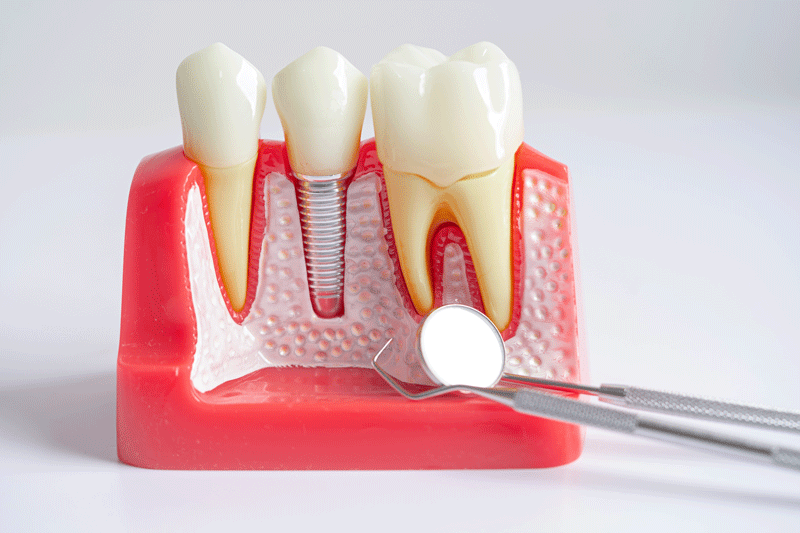
Dental implants are artificial tooth roots, usually made from titanium, that are surgically placed into the jawbone to support replacement teeth.
Once the implant integrates with the surrounding bone, it provides a stable foundation for a crown, bridge, or full-arch restoration.
Unlike conventional bridges, single-tooth dental implants generally do not require reshaping adjacent healthy teeth.
Dental implants may be used to replace:
- A single missing tooth.
- Multiple missing teeth.
- Several neighboring teeth with an implant-supported bridge.
- An entire upper or lower arch of teeth.
- All teeth in both arches.
For many patients, implants offer a long-term solution that closely replicates the function and appearance of natural teeth.
Learn more about our dental implant surgery and treatment options in Lexington, KY.
2. Dental Bridges
A traditional dental bridge replaces one or more missing teeth using neighboring natural teeth for support.
The adjacent teeth are typically prepared for crowns, which support the artificial teeth that fill the gap.
Dental bridges may be appropriate for patients who prefer a fixed restoration but are not candidates for implant surgery.
However, conventional bridges do not replace missing tooth roots and may require altering otherwise healthy teeth.
3. Removable Dentures
Dentures are removable appliances that replace some or all missing teeth.
Partial dentures replace multiple missing teeth while fitting around remaining natural teeth. Complete dentures restore an entire arch when no natural teeth remain.
Traditional dentures are generally less expensive initially than implant-supported restorations and do not require implant surgery.
However, some patients experience movement, reduced chewing efficiency, or discomfort as the jawbone and gum tissues change over time.
Patients who want greater stability may benefit from exploring fixed teeth vs. removable tooth replacement options.
Dental Implants vs. Dentures: Which Is Better?
Dental implants and dentures can both restore missing teeth, but they differ in stability, maintenance, comfort, and long-term function.
Traditional dentures rest on the gums and may require adhesives or periodic adjustments. Dental implants are anchored in the jawbone and can support fixed or removable restorations.
Some important differences include:
Dental implants:
- Provide stable support for replacement teeth.
- Help maintain bone around implant sites.
- Do not generally require adhesives for fixed restorations.
- Can support individual teeth or full-arch restorations.
- Require surgery and an appropriate healing process.
Traditional dentures:
- Usually have a lower initial cost.
- Do not require implant placement surgery.
- Can replace many missing teeth at once.
- Must be removed for routine cleaning.
- May require relining or replacement as oral tissues change.
Neither treatment is automatically right for everyone.
For patients who want replacement teeth that remain securely in place, full mouth dental implants may provide a more stable alternative to conventional removable dentures.
Why Are Dental Implants a Popular Tooth Replacement Choice?
Dental implants have become a popular treatment for missing teeth because they address both the visible tooth and the missing root structure.
Their advantages go beyond simply filling an empty space.
Dental Implants Help Preserve Jawbone
When a natural tooth is lost, the surrounding jawbone no longer receives the same stimulation during chewing.
Over time, this can contribute to bone resorption, or gradual loss of bone volume.
Dental implants transfer chewing forces into the jawbone and help maintain bone around the implant.
Although implants do not prevent every form of age-related or dental bone loss, they can help reduce the localized changes that occur after tooth loss.
Dental Implants Restore Chewing Stability
Because implants are secured in the jawbone, they provide a stable foundation for replacement teeth.
This stability may make it easier to chew a wider variety of foods compared with certain removable dentures.
The amount of restored chewing function depends on the type of implant restoration, the patient’s bite, and overall oral health.
Dental Implants Protect Neighboring Teeth
Replacing a single missing tooth with an implant generally allows the neighboring teeth to remain intact.
This is particularly beneficial when those teeth are healthy and would otherwise need to be reshaped to support a traditional dental bridge.
Dental Implants Look Natural
Modern implant restorations are designed to complement the shape, color, and proportions of your remaining teeth.
At Bluegrass Dentistry, advanced digital treatment planning helps our team design restorations that consider both appearance and function.
Dental Implants Offer Long-Term Value
With proper care and regular professional maintenance, dental implants can last for decades.
The crown, bridge, or prosthesis attached to an implant may eventually need repair or replacement, but the implant itself is designed to provide durable support.
Single Tooth, Multiple Teeth, and Full Mouth Dental Implant Options
Dental implants are not limited to replacing one tooth. Different treatment designs can address varying degrees of tooth loss.
Single Tooth Dental Implants
For a single missing tooth, one implant can typically support a custom dental crown.
This approach helps restore chewing function while preserving the surrounding healthy teeth.
Multiple Dental Implants
If several teeth are missing, your dentist may recommend individual implants or an implant-supported bridge.
An implant-supported bridge may replace multiple neighboring teeth without requiring a separate implant for every missing tooth.
Full Mouth Dental Implants
For patients missing most or all their teeth, full mouth dental implants can support a fixed replacement arch.
At Bluegrass Dentistry, our full mouth dental implant treatments use carefully planned implant placement to support custom restorations designed for long-term function and aesthetics.
Depending on the patient’s anatomy and treatment plan, a full-arch restoration may be supported by four, six, or another appropriate number of implants.
This approach can provide an alternative to conventional dentures for patients seeking stable, fixed replacement teeth.
What Is the Dental Implant Procedure Like?
The dental implant procedure involves several stages designed to provide stable, functional replacement teeth.
Although every treatment plan is different, most patients can expect the following steps.
Step 1: Consultation and Digital Treatment Planning
Your implant journey begins with an examination of your teeth, gums, bite, and jawbone.
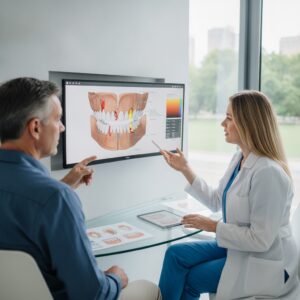
At Bluegrass Dentistry, our team uses advanced digital technology, including 3D imaging, to evaluate oral anatomy and plan implant placement.
During your consultation, we’ll discuss your goals, review available treatments, and explain what to expect throughout the process.
Step 2: Preparing for Dental Implants
Some patients may need preliminary procedures before implant placement.
These can include tooth extractions, treatment for gum disease, or bone grafting when additional bone support is necessary.
Not every patient requires these procedures.
Step 3: Dental Implant Placement
During surgery, the dental implant is placed into the jawbone at a carefully planned position.
Local anesthesia is used to numb the treatment area. Additional anesthesia and sedation options may be discussed based on your treatment and medical history.
Our team uses digital planning and guided surgical techniques to support accurate implant placement.
Step 4: Healing and Osseointegration
After implant placement, the surrounding bone gradually integrates with the implant surface.
This process, called osseointegration, typically occurs over several months.
Healing times vary depending on bone health, the number of implants placed, and whether additional procedures were necessary.
Step 5: Attaching Your Replacement Teeth
Once the implants are ready, your custom restoration is attached.
For a single missing tooth, this may be an individual crown. For multiple missing teeth, it may be an implant-supported bridge or full-arch prosthesis.
Some qualifying patients may receive temporary teeth on the same day as implant surgery, while their final restoration is completed after healing.
Can You Get Dental Implants and New Teeth in One Day?
Yes. Some patients qualify for a treatment approach commonly referred to as teeth-in-a-day.
With immediate-load implant treatment, a temporary restoration may be attached shortly after implants are placed, allowing patients to leave with replacement teeth while healing begins.
However, teeth-in-a-day does not mean the implants have completely healed in one appointment.
The implants still require time to integrate with the jawbone, and the final prosthesis may be placed after the healing process.
At Bluegrass Dentistry in Lexington, KY, our team uses digital smile design and comprehensive treatment planning to determine whether immediate-load dental implants are appropriate for each patient.
The decision depends on bone quality, implant stability, oral health, and other clinical factors.
Who Is a Good Candidate for Dental Implants?
Many adults with missing teeth can be considered for dental implants, but candidacy depends on several factors.
Ideal candidates generally have:
- Healthy gum tissue or manageable periodontal conditions.
- Sufficient jawbone to support implant placement.
- Good oral hygiene habits.
- Medical conditions that are appropriately managed.
- A willingness to maintain regular dental visits.
Smoking, uncontrolled diabetes, active gum disease, and certain medications or medical conditions can affect treatment planning and healing.
However, these factors do not automatically mean dental implants are impossible.
Some patients with advanced jawbone loss may still qualify for specialized treatment.
Bluegrass Dentistry offers zygomatic dental implants for selected patients with significant upper jawbone loss who may not be candidates for conventional implant placement.
A comprehensive examination and imaging evaluation are necessary to determine your options.
How Much Do Dental Implants Cost in Lexington, KY?
Dental implant costs vary based on how many teeth need replacement and the complexity of the treatment.
The cost of replacing one missing tooth is different from restoring an entire arch with implants.
Factors that affect pricing include:
- The number of implants needed.
- The type of crown, bridge, or full-arch restoration.
- Whether extractions are required.
- The need for bone grafting or other preparatory procedures.
- Sedation or anesthesia requirements.
- The materials used for the final replacement teeth.
While dental implants generally require a higher initial investment than traditional dentures, they may provide long-term advantages in stability, function, and preservation of adjacent teeth.
At Bluegrass Dentistry, we believe patients should understand the complete scope of treatment before making a decision.
Our team can review available insurance and financing options and explain the costs associated with your personalized treatment plan.
How Long Do Dental Implants Last?
Dental implants are designed to provide long-term tooth replacement.
With appropriate maintenance, implant posts can last for many years or even decades. However, their longevity depends on several factors, including:
- Daily brushing and cleaning around the implant.
- Regular dental checkups.
- Healthy gums and surrounding bone.
- Avoiding tobacco use.
- Managing grinding or excessive bite forces.
- Overall medical and oral health.
Although the implant fixture can last for decades, the attached crown or prosthesis may eventually require maintenance or replacement.
Regular dental care helps identify potential problems early and supports the long-term health of your restoration.
Why Choose Bluegrass Dentistry for Dental Implants in Lexington, KY?
Choosing the right dental implant provider is an important part of restoring your smile.
At Bluegrass Dentistry, Dr. Seth Chambers and our experienced team combine advanced training, digital technology, and personalized treatment planning to help patients achieve functional, natural-looking smiles.
Our approach includes:
- Comprehensive implant care: From single-tooth replacement to full mouth dental implants.
- Advanced digital technology: 3D imaging, digital smile design, and guided treatment planning.
- In-house treatment coordination: Implant planning, surgical care, and restoration through one dental practice.
- Advanced bone loss solutions: Specialized procedures for patients with complex implant needs.
- Personalized care: Treatment plans based on each patient’s oral health, goals, and preferences.
Whether you’re missing one tooth or considering a complete smile restoration, our team can help you understand your options and make an informed decision.
Restore Your Smile With Dental Implants in Lexington, KY
Missing teeth don’t have to determine what you can eat, how comfortably you speak, or how confident you feel when smiling.
Modern teeth replacement options provide solutions for a wide range of dental needs, from individual implants to full-arch restorations.
At Bluegrass Dentistry, our goal is to help patients throughout Lexington and surrounding Kentucky communities regain comfortable chewing, improve oral function, and enjoy smiles they feel confident sharing.
If you’re ready to explore dental implants or compare your tooth replacement options, our team is here to help.
Schedule your dental implant consultation with Bluegrass Dentistry in Lexington, KY. Call (859) 251-2866 or contact our team to get started.