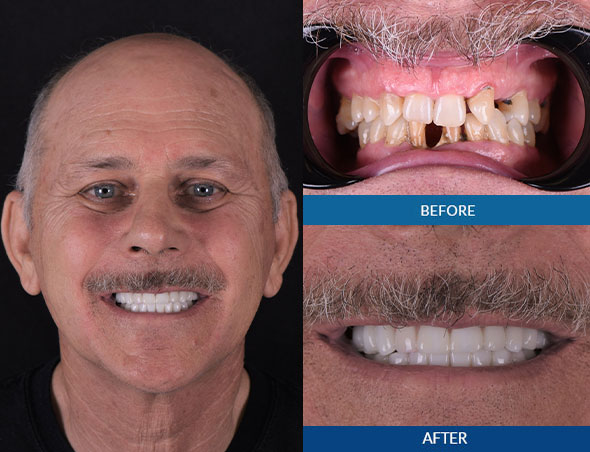
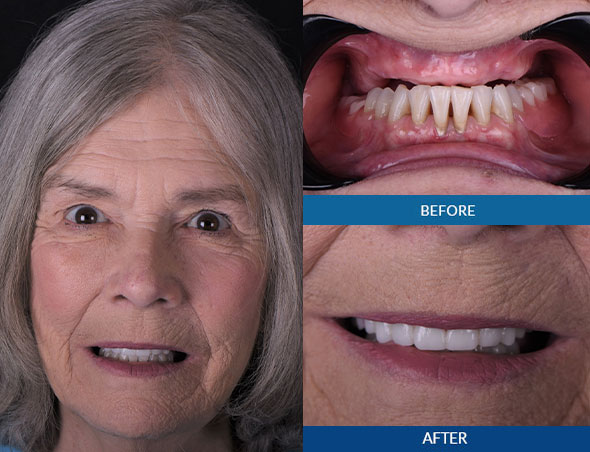
Has a previous dentist informed you that your jawbone’s deterioration is hindering the option of dental implants? If so, you might have encountered several repercussions stemming from this condition. The challenges you may face are the lack of support for your remaining teeth and potential changes in your facial structure.
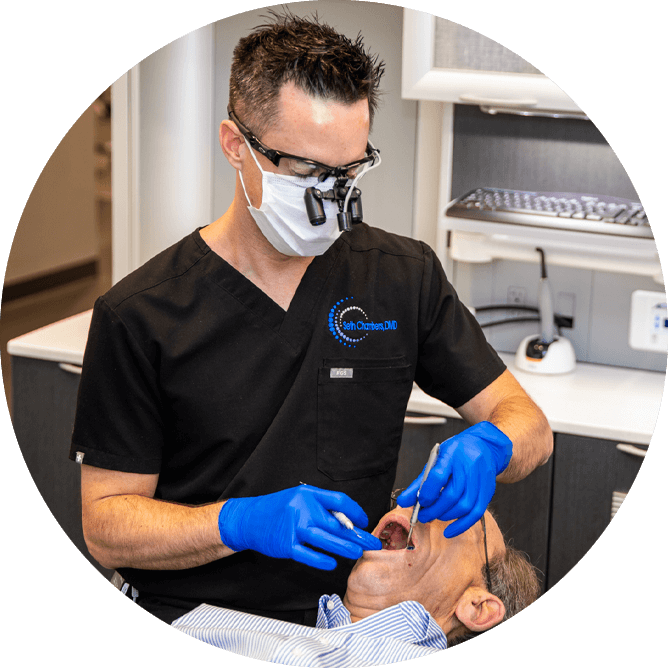
At Bluegrass Dentistry, under the guidance of Dr. Seth Chambers, we firmly believe that everyone should have the opportunity to experience the benefits of full mouth dental implants in Lexington, KY.
We take pride in offering zygomatic dental implant surgery as an innovative alternative to traditional implants. This specialized procedure, undertaken by only a select group of dentists nationwide, has been made accessible through our advanced training and technology.
Rest assured, you’re in capable hands as we strive to provide a solution that transforms your oral health and quality of life.
What Are Zygomatic Implants?
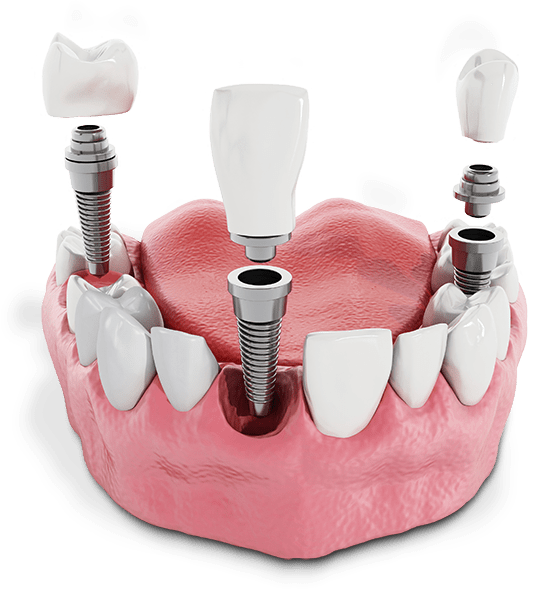
Unlike conventional dental implants, which usually rely on four to six posts in the jawbone, zygomatic implants present an advanced alternative, especially beneficial for those grappling with pronounced bone loss, primarily in the upper jaw.
This intricate approach entails securing the implant posts to the zygomatic bones in the cheek, diverging from the customary jawbone attachment. Leveraging the formidable resilience of the zygomatic bone, we extend the possibility of full mouth dental implants, even to individuals deemed unsuitable candidates for conventional implant techniques.
Despite their perceived complexity, zygomatic dental implants typically involve just one surgical session. Their distinct advantage lies in often negating the necessity for supplementary bone grafting, allowing us to streamline the process and unveil a functional, exquisite new smile faster than conventional approaches.
At Bluegrass Dentistry, the journey commences with an oral assessment and cone-beam computed tomography (CBCT) scans. These scans thoroughly evaluate your bone structure, nerves, and sinus cavities, enabling meticulous planning for precise implant positioning.
We offer sedation dentistry to ensure comfort and alleviate surgical apprehensions.
Dental implants are strategically situated in predetermined locations during the procedure to ensure optimal stability and safeguard neighboring structures. Before you leave, we’ll provide a natural-looking temporary restoration so you can immediately enjoy your brand-new smile’s benefits!
Over 3-6 months, your implants will fuse to your zygomatic bone through osseointegration. Once healed, you’ll receive a permanent restoration and successful integration of implants with your underlying bone.
Like many other patients who have chosen zygomatic implants in Lexington, KY, you’ll relish remarkable functional and aesthetic advantages for years, potentially even a lifetime!
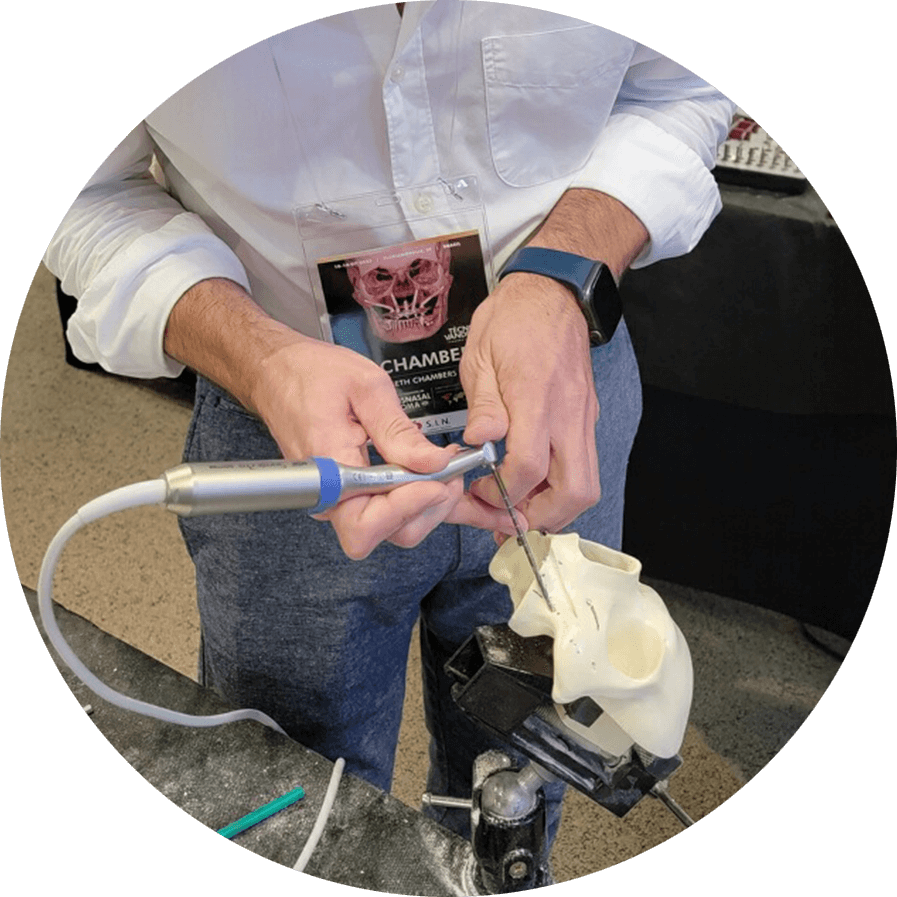
Transnasal dental implants are a cutting-edge dental solution that involves the placement of dental implants through the nasal cavity. This innovative technique offers a minimally invasive alternative if you have limited bone structure in the upper jaw, eliminating the need for traditional surgery through the gums. By accessing the nasal passage, transnasal dental implants provide a unique approach to anchor dental restorations, securely offering improved stability and functionality.
2
Pterygoid Implants
Pterygoid implants are specialized dental implants designed to address complex cases of tooth loss and limited bone density in the posterior upper jaw. Unlike traditional implants that rely solely on the jawbone for support, pterygoid implants anchor into the pterygoid bone, a dense area near the back of the mouth. This innovative technique enables stable and secure implant placement, offering a viable solution if you may not be a suitable candidate for conventional implant methods.
3
Trans-Sinus Implants
Trans-sinus implants are advanced dental implants specifically designed to address tooth loss in the posterior upper jaw, where bone density may be insufficient. This technique involves placing implants through the maxillary sinus, creating a secure foundation for dental restorations. By utilizing the sinus area for implant placement, trans-sinus implants offer a unique solution that often eliminates the need for additional bone grafting procedures, allowing patients to enjoy restored oral function and aesthetics.
"Now, I don’t have to wait. I can smile to whoever I want to, with whoever I want to, wherever I want to... Don’t let fear control you, because everything can be worked out to make you a better you!"
"You go to sleep with no teeth and then wake up, and you got a mouthful… now, you can't quit smiling, and you want everybody to see how beautiful they are and what a difference it makes in your life!"
"Coming here literally saved my life… To be able to smile again, to have your husband look at you and say, 'Girl, you look great'—it gave me the confidence to live again."
"Sedation dentistry has really, really improved the quality of my life and my teeth... I come in, get the IV sedation, the work is done, and there’s no anxiety."
"I really can't believe I waited so long to do it. This is the best investment I've made in myself — for my health, my self-confidence, and my future."
"After I had my implants put in, I’ve had a lot of compliments — people say I look 20 years younger. They feel completely natural, and it’s just an amazing feeling to have teeth again"
"Bluegrass Dentistry gave me something I never thought I would have — a full set of teeth, confidence, and a quality of life I didn’t think was possible."
I understand the information disclosed in this form may be subject to re-disclosure and may no longer be protected by HIPAA privacy regulations and the HITECH Act.
Find out if you're a
candidate for dental implants
Answer the Following Questions To Learn more about our pricing and financing options.
Questions Our Patients Ask About Zygmatic Dental Implants
What are zygomatic dental implants?
Zygomatic dental implants are specialized implants used to support replacement teeth in patients with severe bone loss in the upper jaw. Instead of relying entirely on the upper jawbone, these longer implants are anchored in the dense zygomatic bone, commonly called the cheekbone.
This advanced approach may allow certain patients to receive fixed upper teeth without first undergoing extensive bone-grafting procedures.
Who may be a candidate for zygomatic implants?
Zygomatic implants may be considered for patients who are missing most or all of their upper teeth and do not have enough upper-jaw bone for conventional implants.
Potential candidates may include people who:
Have severe upper-jaw bone loss
Have worn an upper denture for many years
Have been told they are not candidates for traditional dental implants
Have experienced failed bone grafts or conventional implants
Want to avoid a lengthy series of bone-grafting procedures
Need a stable foundation for a complete upper-arch restoration
A clinical examination and three-dimensional CBCT scan are required to determine whether zygomatic implants are appropriate.
Are zygomatic implants used in the lower jaw?
No. Zygomatic implants are designed for the upper jaw because they are anchored in the zygomatic, or cheek, bone.
Patients with severe bone loss in the lower jaw may have other treatment options, including bone grafting, shorter implants, angled implants, or alternative implant positions. The appropriate solution depends on the available bone, nerve location, bite, and type of restoration being planned.
Can zygomatic implants eliminate the need for bone grafting?
Zygomatic implants may allow qualifying patients to avoid extensive upper-jaw bone grafting. By anchoring the implants in the cheekbone, the treatment can use existing dense bone rather than rebuilding the severely resorbed portion of the upper jaw.
Some patients may still require additional procedures based on their anatomy and oral health. Your implant dentist can explain whether grafting is necessary after reviewing your CBCT scan.
How successful are zygomatic implants?
Clinical research has reported strong long-term survival for properly planned zygomatic implants. However, implant survival is not the same as a complication-free result, and no procedure can be guaranteed.
Outcomes depend on the patient’s health, anatomy, oral hygiene, smoking status, implant positioning, restorative design, provider experience, and long-term maintenance.
How can I find out whether zygomatic implants are right for me?
The first step is a comprehensive consultation that includes a medical review, clinical examination, and three-dimensional imaging. This allows the implant team to evaluate your remaining bone, sinus anatomy, existing teeth, bite, and restorative needs.