
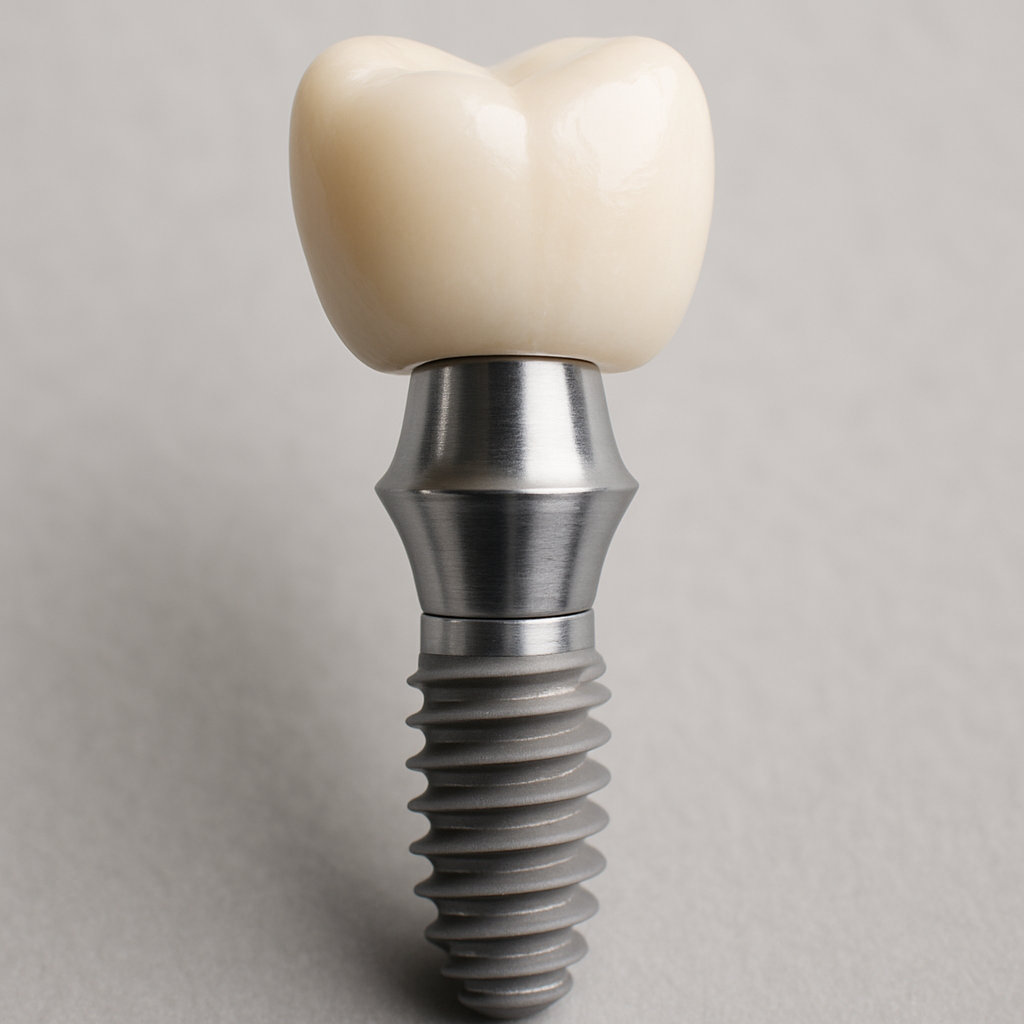
Understanding the implant and abutment helps you know how modern tooth replacement stays stable and looks natural. This guide explains what each piece does, how they work together, common problems and prevention, what to expect during treatment, and how to care for your new tooth. If you’re curious about implant and abutment in Lexington, KY, this article gives clear next steps.
What Is a Dental Implant?
A dental implant is a small post placed into the jaw bone to act like a tooth root. Implants are usually made from titanium or zirconia. Once placed, the bone grows around the implant in a process called osseointegration. That solid bond makes the implant the long-term foundation for a crown, bridge, or denture.
What Is an Abutment?
An abutment is the connector that joins the implant to the final tooth or prosthesis. It screws or locks onto the implant and supports the crown, bridge, or denture. Abutments are commonly made from titanium or zirconia. Titanium is strong and often used under gum tissue; zirconia can be used for a white, esthetic result in the front of the mouth.
How the Implant and Abutment Work Together
The typical sequence is:
- Implant placement into the jaw with imaging and guide planning.
- Healing period for osseointegration (weeks to months).
- Abutment placement once the implant is stable.
- Final crown or prosthesis attached to the abutment.
Temporary abutments and crowns protect the site and shape the gum while you heal. Permanent abutments are made to fit precisely and support the final esthetic result. For those researching implant and abutment in Lexington, KY, digital planning often speeds this workflow and improves fit.
Types of Abutments
- Stock abutments: Off-the-shelf, lower cost, faster delivery. May need adjustments for fit or esthetics.
- Custom abutments: Made to match your gum and crown shape for the best fit and appearance.
- Straight abutments: Used when implants are well aligned with the tooth line.
- Angled abutments: Used to correct implant angles and improve crown position when implants must be tilted.
Common Issues With Implants and Abutments — Causes & Prevention
- Screw loosening — often from improper torque or heavy bite forces. Prevention: correct tightening and regular checks.
- Abutment fracture — due to material fatigue or excessive force. Prevention: choose proper materials and design for the case.
- Peri-implantitis (infection around the implant) — caused by poor hygiene or untreated gum disease. Prevention: daily cleaning and professional care.
- Poor esthetics — wrong abutment height, shape, or color. Prevention: custom abutments and digital design for accurate results.
What to Expect During Treatment
Treatment starts with a consult and 3D imaging (CBCT) to plan implant size and position. Many practices use computer-guided surgery to place implants precisely. Healing time varies but often takes several weeks to a few months for full osseointegration.
Options like same-day restorations are possible with strong planning and in-house lab work. Digital workflows — scanning, guided guides, and in-house milling or 3D printing — speed care and reduce visits while keeping results predictable.
Who Should Place Your Implant and Abutment
Experience and digital technology matter for long-term success. Look for a provider who plans with high-quality 3D imaging, uses guided surgery when needed, and offers precise prosthetic work.
Bluegrass Dentistry in Lexington offers these tools and experience. Dr. Seth Chambers leads the practice with extensive implant training and thousands of placed implants. Their team provides 3D-guided surgery and in-house prosthetics for predictable results while treating complex cases like severe bone loss.
Caring for Your Implant and Abutment Long-Term
Daily care keeps implants healthy:
- Brush twice daily with a soft-bristle brush.
- Use interdental brushes or floss around the abutment and implant.
- Consider a water flosser to clean hard-to-reach spots.
Schedule regular check-ups and cleanings with your dentist. Watch for signs that need urgent care: swelling, pain, looseness, or pus around the implant.
Quick FAQs
- How long do implants and abutments last? With proper care, implants and abutments can last decades. Crowns may need replacement over time.
- Will the abutment be visible? Normally the abutment is below the crown and not visible once the final restoration is placed. Temporary abutments or crowns may be seen during healing.
- Is the procedure painful? Most patients report little pain thanks to sedation and modern techniques. Discomfort is usually manageable with medication.
- Can anyone get an implant and abutment? Most adults are candidates, but factors like bone volume, smoking, and health conditions are considered. Advanced options exist for low bone situations.
If you want to learn more about implant and abutment in Lexington, KY or see a digital preview of your new smile, schedule an implant consultation or digital smile preview at Bluegrass Dentistry. Their team can review options, timing, and a personalized plan to restore function and appearance.