Lower Dental Implants in Lexington, KY: Options for Replacing Bottom Teeth
Missing lower teeth can make it difficult to chew comfortably, speak clearly, and feel confident about your smile. Depending on how many teeth are missing, lower dental implants can support a single crown, an implant-supported bridge, a removable denture, or a complete fixed arch of replacement teeth.
Unlike conventional dentures that rest on the gums, dental implants are positioned in the jawbone to create a stable foundation for replacement teeth. This can provide greater security while eating and speaking, while also helping preserve the bone surrounding the implant sites.
This guide explains the different ways implants can replace bottom teeth, who may qualify, what the procedure involves, and what to expect during recovery.
Schedule a dental implant consultation with Bluegrass Dentistry to receive recommendations based on your health, anatomy, and tooth-replacement goals.
What Are Lower Dental Implants?
Lower dental implants are implant-supported restorations used to replace one or more teeth in the lower jaw, also called the mandible.
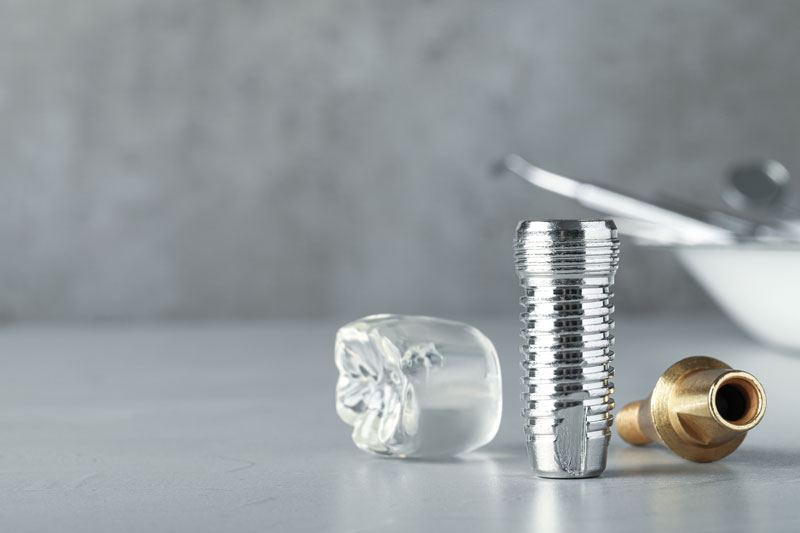
A dental implant is a small post, typically made from titanium, that is placed in the jawbone. As the area heals, the implant bonds with the surrounding bone through a process called osseointegration. It can then support an abutment and a custom crown, bridge, or denture.
The term “bottom teeth implants” does not refer to one specific treatment. It may describe several different solutions:
- A single implant and crown for one missing lower tooth
- An implant-supported bridge for several adjacent missing teeth
- An implant-retained removable lower denture
- A fixed full-arch bridge that replaces all lower teeth
Your recommended option will depend on the number and location of missing teeth, the condition of your remaining teeth, your jawbone, your bite, and whether you prefer a fixed or removable restoration.
Why Are Missing Lower Teeth a Problem?
Every tooth contributes to the way your bite functions. When lower teeth are lost, the effects may extend beyond the visible gap.
Missing bottom teeth may lead to:
- Difficulty biting or chewing certain foods
- Changes in speech
- Shifting or tilting of nearby teeth
- Overeruption of opposing upper teeth
- Uneven pressure on the remaining teeth
- Progressive jawbone loss
- Changes in facial support
- Reduced confidence when smiling or speaking
Replacing missing teeth can restore function and help protect the balance of your bite. The appropriate timing and treatment will depend on your individual oral health.
Types of Lower Dental Implant Treatment
Single Lower-Tooth Implant
A single dental implant may be used when one bottom tooth is missing, and the neighboring teeth are healthy.
The implant replaces the missing tooth root, while a custom crown replaces the visible portion of the tooth. Unlike a traditional bridge, this option does not normally require the adjacent teeth to be reshaped for support.
A single implant may be considered when a tooth has been lost because of:
- Severe decay
- A fracture
- Dental infection
- Gum disease
- Traumatic injury
- A congenitally missing tooth
Implant-Supported Bridge
When several neighboring lower teeth are missing, two or more implants may support a fixed dental bridge.
An implant-supported bridge replaces multiple teeth without requiring an implant beneath every missing tooth. The number and location of implants depend on the length of the gap, available bone, bite forces, and the design of the restoration.
This treatment may provide a fixed alternative to a removable partial denture.
Implant-Retained Lower Denture
A removable lower denture may shift because the tongue, cheeks, and jaw movement can make it difficult to maintain suction. Bone loss may also cause the denture to become loose over time.
Dental implants can provide attachment points that help stabilize a removable lower denture. The denture can still be removed for cleaning, but it snaps or clips onto the implants while being worn.
Potential benefits include:
- Less movement while eating or speaking
- Reduced dependence on denture adhesive
- Improved comfort and confidence
- A more secure fit than a conventional lower denture
Implant-retained dentures generally require fewer implants than a fixed full-arch bridge, but they remain removable and continue to receive some support from the gums.
Fixed Full-Arch Lower Dental Implants
A fixed full-arch restoration replaces an entire lower row of teeth using a bridge secured to several strategically positioned implants.
This type of treatment may also be described as:
- Full-arch dental implants
- All-on-4 dental implants
- All-on-6 dental implants
- All-on-X treatment
- Fixed implant teeth
Despite the terminology, the exact number of implants is not the same for every patient. Some lower arches may be restored with four implants, while others benefit from five, six, or more. The number should be based on bone quality, jaw anatomy, bite forces, prosthetic design, and long-term treatment goals.
Patients who need to replace most or all of their teeth can explore full-mouth dental implant options at Bluegrass Dentistry.
Lower Dental Implants vs. Traditional Dentures
Traditional lower dentures and implant-supported teeth can both replace missing teeth, but they function differently.
| Feature | Traditional Lower Denture | Implant-Supported Teeth |
|---|---|---|
| Support | Rests primarily on the gums | Receives support or retention from implants |
| Stability | May shift during eating or speaking | Typically provides greater stability |
| Removal | Removed at home | May be removable or fixed, depending on design |
| Bone stimulation | Does not replace tooth roots | Implants transfer force into the jawbone |
| Initial treatment | Does not require implant surgery | Requires a surgical procedure and healing |
| Cost | Usually lower initially | Usually requires a higher initial investment |
Neither option is automatically right for every patient. Health, anatomy, preferences, maintenance requirements, treatment time, and finances should all be considered.
Our guide to dental options for missing teeth provides a broader comparison of implants, bridges, and dentures.
Benefits of Replacing Bottom Teeth With Implants
Improved Stability
Dental implants are anchored in the jawbone rather than relying only on gum support. This can help replacement teeth feel more secure during normal activities.
Better Chewing Function
Stable implant-supported teeth can improve your ability to bite and chew. The amount of function restored depends on the type of restoration, implant distribution, bite, and overall oral health.
Support for Clear Speech
Loose dentures may move while speaking. Improving the stability of the replacement teeth can make speech feel more natural for some patients.
Jawbone Preservation
Bone in an area without tooth roots may gradually decrease. Implants transfer biting pressure into the jawbone, helping maintain bone around the implant sites.
Natural Appearance
Implant restorations can be customized to complement the shape, shade, and proportions of your smile. Full-arch restorations can also be designed to provide appropriate lip and facial support.
Protection of Adjacent Teeth
A single implant can replace a tooth without relying on neighboring natural teeth for support. This may allow healthy adjacent tooth structure to remain intact.
Who May Qualify for Lower Dental Implants?
Many adults with missing or failing lower teeth may be considered for implant treatment. Candidacy is determined through a clinical examination, medical review, and three-dimensional imaging.
Factors considered during the evaluation include:
- The number and location of missing teeth
- The health of the gums
- The amount and quality of available jawbone
- The position of the lower-jaw nerve
- The condition of the remaining teeth
- Your bite and jaw movement
- Your medical history and medications
- Smoking or tobacco use
- Your ability to maintain the restoration
- Your treatment goals and expectations
Older age by itself does not necessarily prevent implant treatment. Overall health, healing ability, anatomy, and oral hygiene are generally more important considerations.
Can You Receive Lower Implants With Bone Loss?
Bone loss is common in patients who have been missing lower teeth for an extended period. It can also result from gum disease, infection, trauma, or long-term denture use.
Reduced bone does not automatically rule out implant treatment. Depending on the location and extent of bone loss, possible approaches may include:
- Bone grafting
- Ridge augmentation
- Use of narrower or shorter implants
- Angled implant placement
- Alternative implant positions
- A removable implant-retained restoration
The lower jaw contains a major nerve that provides sensation to the lower lip and chin. Three-dimensional imaging helps the implant dentist locate this nerve and evaluate the height and width of available bone before treatment.
The Lower Dental Implant Procedure
1. Consultation and Examination
Your first visit includes a discussion of your concerns, medical history, dental history, and desired outcome. The dentist will examine your teeth, gums, bite, and any existing dental work.
2. CBCT Imaging and Digital Planning
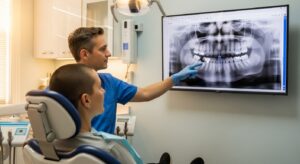
A three-dimensional CBCT scan provides detailed information about the lower jawbone, nerves, tooth roots, and surrounding anatomy. Digital impressions, photographs, or intraoral scans may also be taken.
This information can be used to plan:
- The number of implants
- The size and position of each implant
- The type of restoration
- Whether extractions or grafting are needed
- Whether temporary teeth can be provided
- The anticipated treatment timeline
3. Preparatory Treatment
Any active infection or gum disease should be addressed before or as part of implant treatment. Teeth that cannot be saved may need to be removed, and some patients require bone grafting to improve implant support.
Depending on the case, extraction, grafting, and implant placement may be completed in a single appointment. Other patients benefit from allowing the extraction or grafted area to heal first.
4. Implant Placement
During dental implant surgery, the implant posts are carefully positioned in the lower jawbone.
Local anesthesia is used to numb the treatment area. Sedation may also be available based on your health, comfort preferences, and the complexity of the procedure.
5. Temporary Teeth
If a visible tooth is being replaced, a temporary restoration may be provided during healing. Patients receiving full-arch treatment may qualify for a fixed temporary bridge on the day of implant placement.
Same-day temporary teeth depend on implant stability and other clinical factors. They cannot be guaranteed until the implants have been placed and evaluated.
6. Healing and Osseointegration
The implants need time to bond with the jawbone. This healing process often takes several months, although the timeline varies by patient and procedure.
You will attend follow-up appointments so the team can monitor healing, evaluate the gums, check temporary teeth, and address any concerns.
7. Placement of the Final Restoration
After the implants have integrated, the final crown, bridge, or denture is completed. Your dentist will evaluate the fit, appearance, speech, and bite before treatment is finalized.
Is Lower Dental Implant Surgery Painful?
The treatment area is numbed before implant placement. Patients often describe feeling pressure or vibration during surgery rather than sharp pain.
After the procedure, temporary soreness, swelling, bruising, or jaw stiffness can occur. The amount of discomfort depends on the number of implants, whether teeth were removed, whether grafting was completed, and individual healing.
Your surgical team will provide instructions for medication, food choices, hygiene, activity, and swelling management. Learn more in our guide to recovery after implant-post surgery.
Recovery After Lower Dental Implant Placement
Most patients experience the greatest swelling during the first few days. It should then begin to decrease gradually.
During early recovery, you may be instructed to:
- Use cold packs as directed
- Take prescribed or recommended medication
- Avoid strenuous physical activity
- Eat soft foods
- Avoid smoking and tobacco
- Keep the surgical area clean
- Avoid touching the implant sites
- Attend all scheduled follow-up visits
Contact the practice if you experience severe or increasing pain, persistent bleeding, fever, worsening swelling, numbness that does not improve as expected, or movement of a temporary restoration.
What Can You Eat After Lower Implant Surgery?
Your diet should protect the implants from excessive pressure while they heal.
Suitable foods may include:
- Eggs
- Yogurt
- Applesauce
- Mashed vegetables
- Smooth soups
- Soft pasta
- Cooked fish
- Protein shakes consumed without a straw
Avoid hard, crunchy, sticky, or chewy foods until your dentist confirms that you can safely resume normal chewing. Full-arch patients may need to remain on a modified diet for a longer period while the implants integrate.
How Long Do Lower Dental Implants Last?
Dental implants are intended to provide long-term support, but no treatment can be guaranteed to last for a specific number of years.
Longevity is affected by:
- Oral hygiene
- Gum and bone health
- Smoking
- Diabetes and other health conditions
- Teeth grinding or clenching
- Bite forces
- Restoration design and materials
- Professional maintenance
The implant post and the visible restoration have different maintenance needs. An implant may remain stable while the crown, denture attachment, screw, or bridge eventually requires adjustment, repair, or replacement.
How to Care for Lower Dental Implants
Dental implants cannot develop cavities, but plaque can still cause inflammation and bone loss around them.
To protect your restoration:
- Brush at least twice each day
- Clean carefully around the implant gumline
- Use floss, interdental brushes, or a water flosser as recommended
- Remove and clean a removable implant denture daily
- Attend regular examinations and professional cleanings
- Avoid tobacco products
- Wear a nightguard if you grind or clench
- Report looseness, discomfort, bleeding, or bite changes promptly
Full-arch bridges require special cleaning beneath the restoration. Your dental team should demonstrate the appropriate tools and techniques before treatment is completed.
Possible Risks and Complications
Dental implant treatment has a strong clinical history, but every surgical procedure involves risk.
Potential complications include:
- Infection
- Delayed healing
- Failure of an implant to integrate
- Gum recession
- Bone loss around an implant
- Temporary or persistent nerve symptoms
- Loose or fractured prosthetic components
- Damage to the crown, bridge, or denture
Careful imaging and treatment planning are particularly important in the lower jaw because of the location of the mandibular nerve. Following post-operative and maintenance instructions can also help reduce avoidable complications.
How Much Do Lower Dental Implants Cost?
The cost depends on the number of missing teeth and the type of restoration being provided. A single-implant crown has a different scope of treatment than an implant-retained denture or a fixed full-arch bridge.
Factors that affect cost may include:
- The number of implants
- Tooth extractions
- Bone grafting
- Sedation
- Temporary teeth
- The type and material of the final restoration
- Laboratory or in-house fabrication
- Case complexity
- Follow-up and maintenance
Request a written treatment plan explaining what is included. When comparing estimates, determine whether the quoted amount covers imaging, surgery, temporary teeth, the final restoration, and follow-up care.
Dental insurance may contribute to certain parts of treatment, but benefits vary significantly by plan. Financing options may also be available for qualified patients.
Why Choose Bluegrass Dentistry for Lower Dental Implants?
Bluegrass Dentistry provides both the surgical and restorative phases of dental implant treatment at a single Lexington location. This coordinated approach allows the team to plan implant placement around the desired appearance and function of the final teeth.
Treatment may incorporate:
- Three-dimensional CBCT imaging
- Digital impressions
- Restoratively driven implant planning
- Custom surgical guides
- Guided implant placement
- Bone grafting when needed
- Sedation options
- Temporary and final restorations
- Single-tooth, multi-tooth, and full-arch solutions
Dr. Seth Chambers has pursued advanced education in implant surgery, restorative dentistry, full-mouth rehabilitation, and digital treatment planning. Every treatment plan is developed around the patient’s health, anatomy, functional needs, and desired outcome.
Schedule a Lower Dental Implant Consultation in Lexington, KY
Whether you are missing one bottom tooth or need to replace an entire lower arch, dental implants may provide a stable and natural-looking solution.
A comprehensive consultation is the best way to understand which options are appropriate, how long treatment may take, and what the expected investment will be.
Contact Bluegrass Dentistry to schedule your dental implant consultation or call the new-patient team at (859) 251-2866.