Do You Need a Dental Implant After a Bone Graft? What to Know
If you’ve recently had a dental bone graft or have been told you need one, you may be wondering whether a dental implant is the next step. Bone grafting and dental implants are often discussed together, but they serve different purposes.
No, you do not always need a dental implant after a bone graft. A dental bone graft helps rebuild or preserve jawbone, while a dental implant replaces a missing tooth root and supports a replacement tooth. Whether an implant is recommended depends on why the graft was performed, your oral health, and your long-term treatment goals.
For patients planning to replace missing teeth, a bone graft may be an important part of preparing the jaw for implant placement. In other cases, bone grafting may be performed to preserve bone after an extraction or address defects associated with periodontal disease.
At Bluegrass Dentistry in Lexington, KY, our dental implant team helps patients understand their options for restoring missing teeth, rebuilding jawbone, and planning long-term dental health.
What Is a Dental Bone Graft?
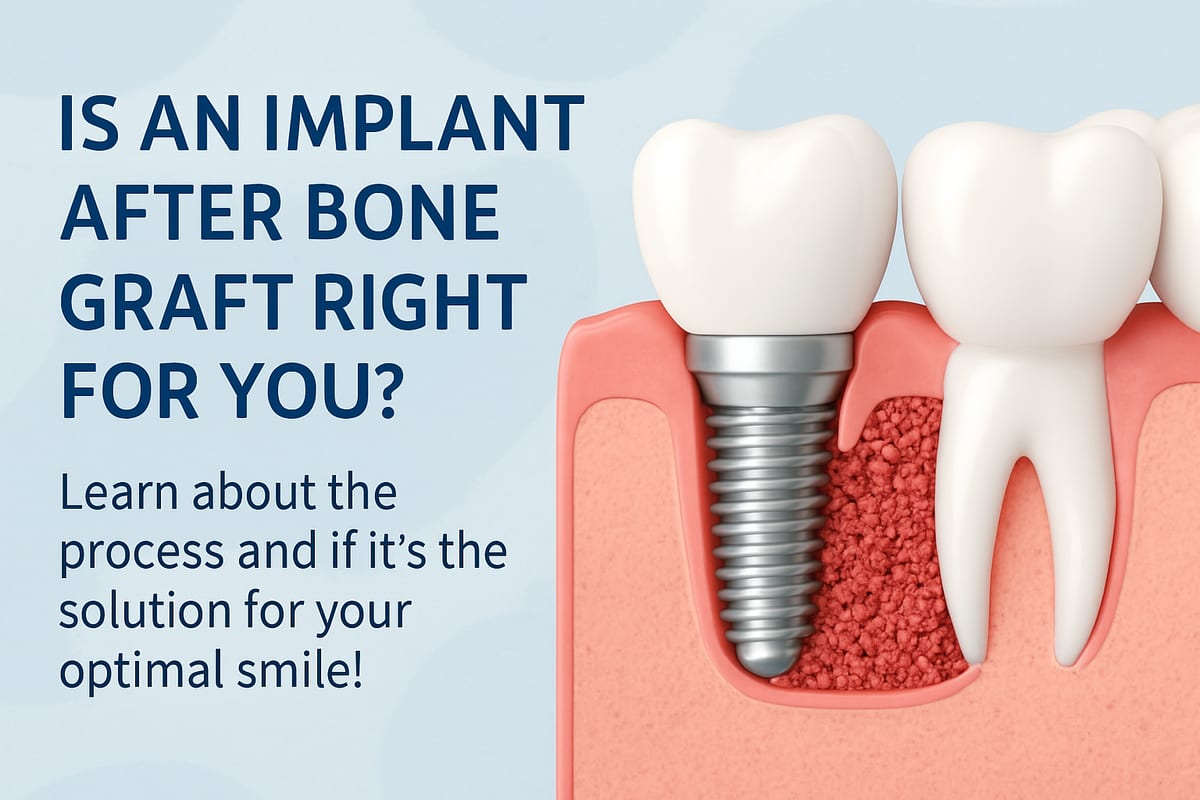
A dental bone graft is a procedure that adds bone or bone-like grafting material to an area of the jaw where bone has been lost or needs additional support.
The material acts as a framework that allows the body to form new bone as healing progresses. Depending on the procedure, grafting materials may come from the patient’s own bone, a human donor, an animal-derived source, or a synthetic material.
Dental bone grafting is commonly used to:
- Preserve jawbone after a tooth extraction.
- Rebuild bone that has deteriorated after tooth loss.
- Prepare the jaw for dental implant placement.
- Address certain bone defects associated with periodontal disease.
- Support the structure of the jaw in areas with insufficient bone.
Bone grafting does not replace a missing tooth. Instead, it helps create or maintain the bone structure needed for oral health or future restorative treatment.
Patients considering dental implant surgery may need bone grafting if their existing jawbone cannot adequately support an implant.
Do You Need an Implant After a Bone Graft?
Not necessarily. Whether you need a dental implant after bone grafting depends primarily on the reason for the graft.
If your bone graft was performed specifically to prepare for dental implant surgery, placing an implant may be the intended next step once the area has healed.
However, if your graft was performed to preserve bone after an extraction, repair a periodontal defect, or support another treatment goal, an implant may not be necessary.
For example:
- Bone graft before dental implants: The graft creates additional support for a planned implant.
- Socket preservation after extraction: The graft helps maintain bone volume, whether or not an implant is placed later.
- Periodontal bone grafting: The procedure may help manage a defect around an existing tooth rather than prepare for tooth replacement.
- Reconstruction after injury or bone loss: Treatment depends on the affected area and the patient’s restorative needs.
If you have a missing tooth, your dentist may recommend an implant, dental bridge, or another replacement option based on your bite, neighboring teeth, and overall oral health.
A bone graft can preserve future options, but it does not automatically mean you must receive an implant.
Why Would You Need a Bone Graft Before Dental Implants?
Dental implants are placed into the jawbone, where they integrate with the surrounding bone to support replacement teeth.
For successful treatment, there must be enough healthy bone in the appropriate location to provide support.
After a tooth is lost, the surrounding jawbone gradually changes because it no longer receives the same stimulation from a natural tooth root.
Bone loss may also result from:
- Advanced periodontal disease.
- Long-term tooth loss.
- Dental infections.
- Facial injuries.
- Certain anatomical limitations.
- Previous extractions.
If the jawbone is too thin, too narrow, or lacks sufficient height, a bone graft may help create a more suitable foundation for implant placement.
However, not everyone needs bone grafting before dental implants. Many patients already have adequate bone for implant surgery.
Your dentist can evaluate your jawbone with appropriate imaging and determine whether grafting is necessary.
Can You Get a Bone Graft and Dental Implant on the Same Day?
Yes. In certain cases, a bone graft and dental implant can be placed during the same surgical appointment.
This approach is sometimes called simultaneous bone grafting and implant placement.
It may be possible when enough natural bone is already present to stabilize the implant, but additional grafting is needed to support the surrounding bone.
For example, a dentist may place an implant into a suitable extraction site while adding grafting material to fill small gaps or improve the surrounding bone contour.
However, same-day grafting and implant placement are not appropriate for every patient.
A staged approach may be recommended when:
- Significant bone loss has occurred.
- The available bone cannot adequately stabilize an implant.
- A large graft is necessary.
- The extraction site requires additional healing.
- Infection or other clinical concerns affect treatment planning.
The key consideration is whether the implant can achieve adequate initial stability. If it cannot, allowing the graft to heal before implant placement may provide a more predictable foundation.
At Bluegrass Dentistry, our team uses advanced imaging and individualized treatment planning to determine the most appropriate approach for each patient.
How Long After a Bone Graft Can You Get a Dental Implant?
For many patients, dental implants can be placed approximately three to six months after bone grafting, although healing may take longer depending on the type and extent of the procedure.
Smaller grafts may heal more quickly, while larger grafts or complex reconstruction may require six months or longer before implant placement.
The timeline depends on several factors:
- The size and location of the graft.
- The type of grafting material used.
- The amount of existing natural bone.
- The patient’s general health.
- Whether an extraction was performed.
- The stability required for implant placement.
- How well the grafted area heals.
Your dentist may recommend follow-up imaging to evaluate the available bone before proceeding.
It is important not to rush implant placement before the grafted area is ready. The goal is to provide a stable foundation that supports long-term implant success.
What Happens If You Don’t Get an Implant After a Bone Graft?
If you choose not to receive a dental implant after a bone graft, the outcome depends on why the graft was performed.
For patients who received socket preservation after tooth extraction, the graft may help maintain bone volume and preserve future treatment options.
However, the grafted area can still undergo natural bone remodeling over time.
A bone graft does not guarantee that the jawbone will maintain its original volume indefinitely, particularly if the missing tooth remains unreplaced.
If the space is left open, neighboring teeth may shift, and the opposing tooth may gradually move into the gap. These changes do not happen in every case, but they can affect bite alignment and future restorative options.
Other tooth replacement options may include:
- A traditional dental bridge.
- A removable partial denture.
- An implant-supported restoration at a later date.
Not every missing tooth requires replacement, and the best decision depends on its location, your bite, and the condition of your remaining teeth.
Your dentist can explain whether an implant would provide meaningful functional benefits in your situation.
What Are the Different Types of Dental Bone Grafts?
Several bone grafting techniques may be used in dentistry. The appropriate procedure depends on the location and amount of bone loss.
Socket Preservation Bone Graft
Socket preservation is performed after tooth extraction.
Grafting material is placed into the empty tooth socket to help reduce bone loss during healing.
This procedure may be recommended when a patient is considering future dental implant treatment.
Ridge Augmentation
Ridge augmentation helps rebuild the width or height of the jawbone in areas where significant bone loss has occurred.
It may be necessary when the existing bone cannot adequately support a dental implant.
Sinus Lift Bone Graft
A sinus lift is sometimes recommended for patients who need dental implants in the upper back jaw.
Because the maxillary sinuses are located near the upper molars, there may not be enough bone height for conventional implant placement.
A sinus lift creates space for grafting material to increase the available bone beneath the sinus.
Periodontal Bone Grafting
Certain periodontal procedures use bone grafting materials to treat defects around existing teeth.
These treatments are intended to support periodontal health rather than necessarily prepare for dental implants.
The best approach depends on your anatomy and treatment goals.
What Is Dental Bone Graft Recovery Like?
Recovery after dental bone grafting varies depending on the extent of the procedure.
Most patients experience some temporary soreness, swelling, or tenderness during the first several days after treatment.
Your dental team will provide instructions to help protect the grafted area while healing begins.
Common aftercare recommendations may include:
- Eating soft foods during the initial recovery period.
- Avoiding direct pressure on the surgical area.
- Following prescribed medication instructions.
- Avoiding smoking and tobacco products.
- Maintaining oral hygiene according to your dentist’s directions.
- Attending scheduled follow-up appointments.
Although initial soft-tissue healing may occur within a few weeks, bone remodeling and maturation take considerably longer.
Contact your dentist if you experience worsening pain, increasing swelling, fever, persistent bleeding, or other unexpected symptoms.
How Do You Know if a Dental Bone Graft Is Healing Properly?
Bone graft healing cannot be fully evaluated based on appearance or symptoms alone.
Your dentist may assess healing through clinical examinations and, when necessary, dental imaging.
During recovery, mild tenderness and swelling are common. These symptoms should generally improve rather than become progressively worse.
Signs that warrant professional evaluation include:
- Increasing pain after the initial recovery period.
- Persistent or worsening swelling.
- Fever.
- Drainage or a persistent unpleasant taste.
- Significant bleeding.
- An incision that opens or fails to heal.
Occasionally, small graft particles may become visible or work their way out during healing. Whether this is expected depends on the procedure, so contact your dental team for guidance rather than assuming the graft has failed.
Successful healing involves more than the gums closing over the area. The underlying bone must also develop enough support for the planned treatment.
How Much Does a Dental Bone Graft Cost?
The cost of a dental bone graft varies depending on the procedure, materials, and complexity of treatment.
A small socket preservation graft may cost less than a larger ridge augmentation or sinus lift.
Factors influencing cost include:
- The type of bone graft.
- The amount of grafting material needed.
- The location of the procedure.
- Whether tooth extraction is also required.
- Imaging and surgical planning.
- Additional treatment needed before implant placement.
Dental insurance may cover certain grafting procedures, particularly when they are medically or dentally necessary, but coverage varies by plan.
Patients considering implants should ask whether grafting is included in their overall treatment estimate or billed separately.
At Bluegrass Dentistry, our team can explain the procedures recommended for your case and discuss available insurance and financing options.
Can You Get Dental Implants Without a Bone Graft?
Yes. Many patients can receive dental implants without bone grafting.
If there is enough healthy jawbone to support the implant, additional grafting may not be necessary.
Even patients with substantial bone loss may have alternatives to conventional grafting.
For example, specialized implant techniques can sometimes use available bone in different locations to support replacement teeth.
At Bluegrass Dentistry, we offer advanced treatment options, including zygomatic dental implants for selected patients with severe upper jawbone loss.
These implants are anchored in the cheekbone rather than relying entirely on the upper jawbone for support.
However, zygomatic implants are specialized procedures and are not appropriate for every patient.
A comprehensive evaluation can help determine whether conventional implants, grafting, or an alternative approach offers the most suitable solution.
Dental Bone Grafts and Implant Treatment in Lexington, KY
Whether you’ve recently undergone bone grafting or are exploring dental implants for missing teeth, understanding your treatment options can help you make an informed decision.
At Bluegrass Dentistry in Lexington, KY, Dr. Seth Chambers and our experienced dental implant team provide personalized evaluations and advanced treatment planning for patients with a wide range of tooth replacement needs.
From conventional dental implants to full mouth dental implants and specialized options for significant bone loss, our goal is to help patients restore comfortable function and long-term oral health.
If you’re wondering whether you need a dental implant after a bone graft, how long you should wait, or whether you qualify for implant treatment, our team can help.
Schedule a dental implant consultation with Bluegrass Dentistry in Lexington, KY.
Contact our team to learn more about your tooth replacement options and take the next step toward restoring your smile.