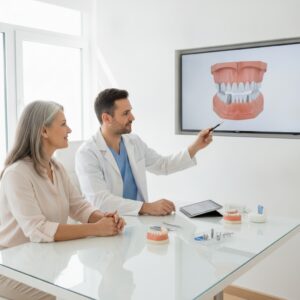

Periodontal disease can lead to tooth loss, but dental implants for periodontal disease can be a reliable, long-term solution when infection is controlled first. This article explains how gum disease causes tooth loss, why implants are often the best replacement, who can get them, typical treatment steps, advanced options for severe bone loss, risks and success tips, and how to begin treatment.
How periodontal disease causes tooth loss
Periodontal (gum) disease is an infection that destroys the gum tissue and the jawbone that hold teeth in place. As bone and soft tissue break down, teeth loosen, ache, and can eventually fall out. Losing teeth affects chewing, speech, and can speed up bone loss in the jaw. Replacing missing teeth matters to keep chewing function, maintain facial shape, and prevent nearby teeth from shifting.
Why consider dental implants for periodontal disease
Dental implants replace tooth roots with titanium posts that fuse to bone, then receive a crown or bridge. Benefits include restored chewing power, prevention of further bone loss, a natural look, and a permanent feel compared with removable dentures. For many with gum disease, dental implants for periodontal disease in Lexington offer the most stable and long-lasting option.
Who is a candidate for dental implants for periodontal disease
Controlling infection first
Active periodontal infection must be treated before implant placement. Deep cleanings, pocket reduction, or periodontal surgery can stop disease and create a healthy foundation for implants.
Bone health and other medical factors
Enough bone is needed to anchor implants. Smoking, uncontrolled diabetes, certain medications, and severe bone loss can affect candidacy. Bone grafting is a common and effective solution to rebuild lost bone so implants can be placed later.
Typical treatment steps after periodontal disease
Step 1: Assessment and 3D imaging
A full exam and CBCT 3D scan map bone volume and anatomy for safe planning.
Step 2: Infection control and extractions
Hopeless teeth are removed and infection treated to create a healthy bed for future implants.
Step 3: Bone grafting or advanced implant techniques
Bone grafts or sinus lifts restore volume. In severe cases, specialized implants can bypass lost bone.
Step 4: Guided implant placement and same-day provisional teeth
Computer-guided surgery increases precision. When possible, temporary teeth are placed the same day for immediate function.
Step 5: Final restorations and ongoing periodontal maintenance
After healing, custom crowns are attached. Ongoing cleanings and home care protect implants from future infection.
Advanced options when bone loss is severe
When jawbone is too thin, zygomatic or pterygoid implants anchor in alternative bones. 3D planning and experienced surgeons make dental implants for periodontal disease in Lexington possible even with major bone loss.
Success rates, risks, and how to improve outcomes
Implant success is high when infection is controlled—often over 90% long-term. Risks include infection, implant failure, or complications from surgery. Stop smoking, control chronic conditions, practice excellent oral hygiene, and attend regular check-ups to improve outcomes.
Why Bluegrass Dentistry for dental implants for periodontal disease
Bluegrass Dentistry in Lexington focuses on advanced implant care led by Dr. Seth Chambers. The team uses 3D-guided workflows, in-house prosthetics, and offers all-inclusive pricing that covers sedation, grafting, and restorations. Their experience with complex cases makes implant solutions predictable and comfortable.
Next steps: what to expect at your consultation
At your consult you’ll get an exam, CBCT imaging, and a clear treatment plan with timelines and costs. If you’re ready to learn if dental implants for periodontal disease in Lexington are right for you, schedule a consultation to review options and the next steps toward a stable, natural smile.