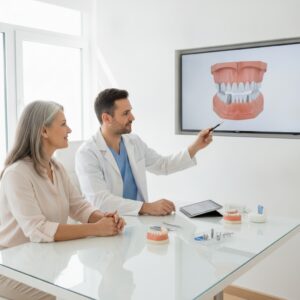

Understanding the intricacies of dental implants is crucial for anyone considering this advanced option for tooth replacement. Dental implants offer an exciting solution to restore not just the aesthetics of your smile but also the functionality of your teeth. By diving into the various components of dental implants, we can help alleviate concerns and provide a clear overview of how each component contributes to the success of the procedure.
Anatomy of a Dental Implant
A dental implant is composed of three main components: the titanium post, the abutment, and the crown. Each plays a unique role in replicating the natural tooth structure.
The Role of the Titanium Post
The titanium post acts as the root of the dental implant. Surgically placed into the jawbone, it provides a sturdy foundation thanks to its unique biocompatibility, ensuring long-term stability and encouraging bone growth around it. For more insight into the role of the tooth post in dental implants, explore further.
Function and Placement
Inserted directly into the jaw, the titanium post serves as a robust base for the rest of the implant parts. It undergoes a process called osseointegration, where it fuses with the bone, providing durability and strength.
Longevity and Biocompatibility
Thanks to its biocompatibility, titanium interacts seamlessly with bone tissue, minimizing chances of rejection and maximizing longevity.
Understanding the Abutment
The abutment connects the titanium post to the crown. Often made from titanium or ceramic, it is pivotal in ensuring the stability and alignment of the dental implant system.
Connection Between Post and Crown
The abutment serves as a transition piece, securely fitting between the titanium post and the crown to anchor them together.
Customization Options
Abutments can be customized to suit specific aesthetic and structural needs, allowing for a personalized dental implant experience.
The Crown: Your New Tooth
The crown is the visible part of the dental implant, styled to match your other teeth. This ensures a seamless integration within your smile. To understand the variety of materials used for crowns, you can learn about porcelain veneers in Lexington, KY.
Materials Used for Crowns
Crowns can be made of porcelain, ceramic, or metal alloys, offering flexible options based on durability and cosmetic preferences.
Functionality and Aesthetics
Designed to mirror the function and appearance of a natural tooth, the crown allows normal chewing and a natural-looking smile.
How Dental Implant Parts Work Together
The synergy of implant parts ensures both strength and beauty. When integrated properly, they maintain overall oral health and improve bite function.
Innovations in Dental Implant Technology
Ongoing advancements, such as guided implant surgery and computer-aided design, streamline procedures and enhance outcomes.
New Materials and Techniques
Materials like zirconia offer alternatives for those with metal sensitivities, enhancing patient comfort and results.
Benefits for Patients
Innovative technologies reduce recovery times and increase placement precision, improving overall satisfaction and success rates.
Comparing Dental Implant Parts with Other Restorations
Dental implants are often compared to bridges and dentures, offering superior durability and natural function. Explore the benefits and complications further by reading about the perks of full-mouth replacement with dental implants.
Bridges and Dentures
Traditional solutions, such as bridges and dentures, do not offer the same level of support or longevity as implants.
Advantages of Implants
Implants safeguard jawbone health and ensure permanent restoration, unlike temporary solutions that require adjustments over time.
Cost Considerations and Insurance
Several factors, including material choice and the number of implants needed, influence total costs. Many insurance plans offer partial coverage for certain components. To understand the various costs, explore the factors that determine the cost of dental implants.
Factors Influencing Cost
The complexity of individual cases and specific material preferences impact the overall investment required for implants.
Insurance Coverage Options
Consulting your insurance provider can determine how much of the cost is covered by your dental plan.
What to Expect During the Dental Implant Process
Getting a dental implant involves several steps, from the initial consultation to the final crown placement, each critical to optimal results.
Step-by-Step Journey
It typically begins with a consultation, followed by surgical placement of the implant, healing, abutment connection, and finally crown attachment.
Recovery Timeline
Healing can take several months, with periodic check-ins to ensure successful integration of the implant parts.
Choosing the right provider for your dental implants is as important as understanding the procedure itself. At Bluegrass Dentistry, Bluegrass Dentistry delivers tailored care rooted in expertise, promising a positive implant experience. Contact today for a consultation, and let’s start your journey towards a restored, healthy smile.