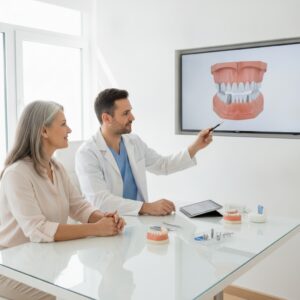
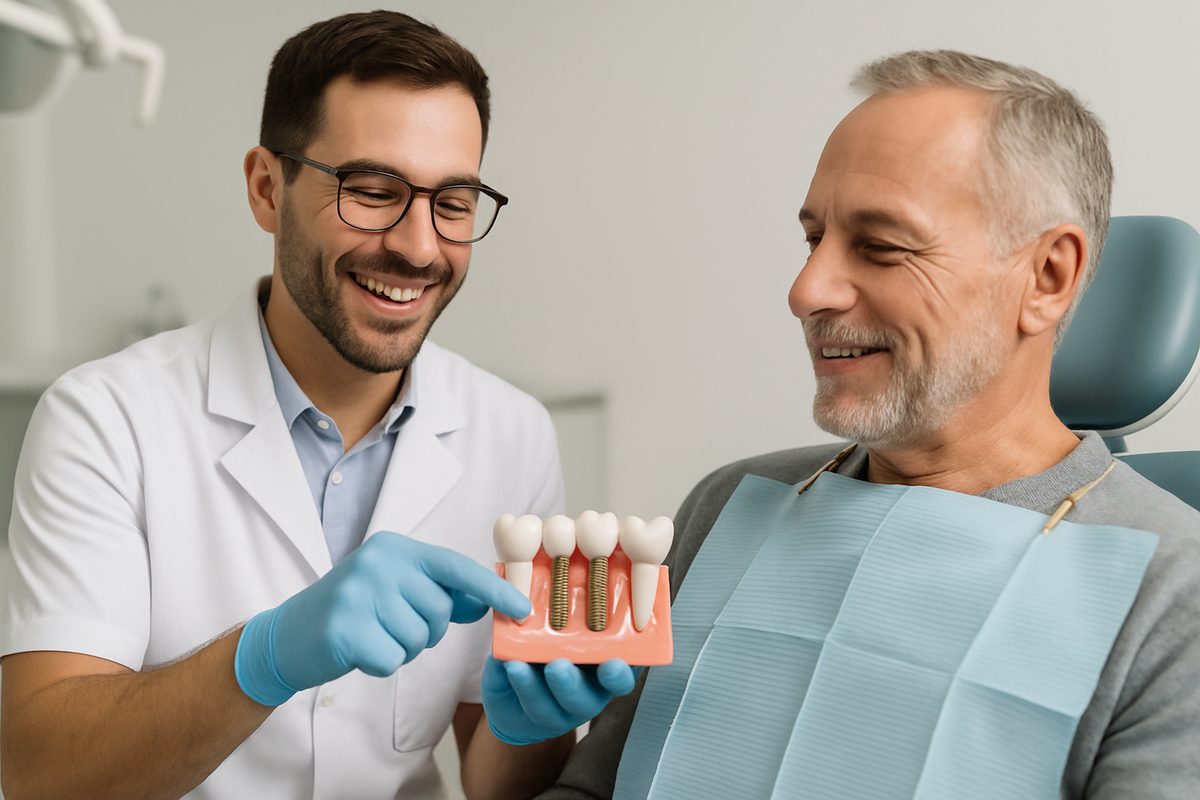
Thinking about a full implant? This guide explains what a full implant is, who benefits, and the clear next steps to get started. You’ll learn common approaches (like full-arch and All-on-4/6), how clinicians evaluate candidates, the treatment timeline, recovery tips, and advanced options when bone is limited. If you’re considering a full implant in Lexington, this will help you decide and prepare for a consultation.
What is a full implant (full-mouth implant)?
A full implant, or full-mouth implant, replaces an entire arch or both arches of teeth with a permanent prosthesis. Common approaches include full-arch implants, All-on-4 or All-on-6 techniques, implant-supported bridges, and individual implants for each tooth. The goal is the same: restore chewing, speech, and appearance with a stable, long-lasting prosthesis.
All-on-4/6 places a small number of strategically angled implants to support a whole arch, often avoiding extensive grafting. Implant-supported bridges use several implants to support a bridge spanning multiple teeth. Patients who choose a full implant in Lexington, KY, typically want a predictable, fixed solution rather than removable dentures.
Who is a good candidate for a full implant?
A full implant may be right for you if you have:
- Many failing or missing teeth
- Ill-fitting or painful dentures
- Chronic dental infections or advanced decay
- Desire for a permanent, functional smile
Medical and lifestyle factors also affect candidacy. Smoking, uncontrolled diabetes, certain autoimmune conditions, and poor bone health can increase risks or require extra planning. Many patients with low bone volume can still get a full implant in Lexington using advanced techniques or grafting when needed.
How we evaluate and plan for a full implant
Planning a successful full implant starts with precision diagnostics:
- Comprehensive oral exam and dental history
- 3D CBCT imaging to map bone, nerves, and sinuses
- Digital smile design to preview esthetic results
- Computer-guided surgical planning for accurate implant placement
High-resolution imaging and guided planning improve safety and predictability. For example, a full implant in Lexington benefits from CBCT scans and virtual planning so the surgical guide places implants exactly where bone and esthetics are optimal.
The full implant treatment process (step-by-step)
Prepping the mouth
Preparation can include tooth extractions, infection control, and grafting or ridge preservation if bone is insufficient. Soft-tissue management may be needed to shape the gums for a natural-looking final result. A thorough prep helps the implant prosthesis last longer and fit better.
Implant surgery and temporary teeth
Implants are placed using guided surgery to improve accuracy. Sedation options (oral, IV, nitrous) are available to keep you comfortable. Many patients receive provisional teeth the same day, so you leave with a functioning smile. If you’re planning a full implant Lexington procedure, same-day provisionalization is a common pathway for faster recovery and immediate function.
Final restoration
After implants integrate (often 3–6 months), the final prosthesis is made. Many practices use in-house 3D printing and milling to create precise frameworks and high-strength zirconia restorations. Zirconia offers durability and a natural look that can last decades with proper care. A full implant in Lexington may be completed more quickly when restorations are crafted on-site.
Recovery, risks, and long-term care for a full implant
Typical healing includes mild swelling and soreness in the first week and gradual improvement over several weeks. Risks include infection, implant failure, and nerve irritation, but careful planning and hygiene help reduce them. To protect your investment:
- Follow post-op instructions and take prescribed medications
- Maintain excellent oral hygiene and avoid smoking
- Attend regular dental checkups and professional cleanings
- Wear any recommended nightguards if you grind your teeth
High-strength zirconia restorations are very durable, but regular maintenance and exams keep them performing well for years.
Advanced options when the bone is limited
When traditional implants aren’t possible due to severe bone loss, advanced alternatives include zygomatic and pterygoid implants. These longer implants anchor into stronger facial bones and can often eliminate the need for extensive grafting. Patients with extreme resorption who want a permanent solution may be candidates for zygomatic or pterygoid options—especially at centers experienced in these techniques.
Why consider Bluegrass Dentistry for a full implant?
Bluegrass Dentistry focuses on full-mouth implant solutions led by Dr. Seth Chambers, a nationally recognized implant surgeon. The practice offers 3D-guided surgery, same-day provisional teeth, and in-house restorations to provide a predictable, streamlined experience. Bluegrass Dentistry performs advanced treatments—including zygomatic implants—so even complex cases can be treated confidently. They also offer all-inclusive pricing that covers sedation, extractions, grafting, and surgical care for clearer expectations.
Next steps: getting a full implant consult
Ready to explore a full implant? Schedule a consult to get a 3D scan and a digital smile preview. Bring any recent dental X-rays, a list of medications, and questions about sedation or timelines. A consultation will give you a personalized plan and transparent pricing so you can make an informed decision about a full implant in Lexington.